
Understanding Sensory Processing in Autism: A Parent's Journey
- AutismPlusMe Team

- Oct 14, 2024
- 3 min read
Updated: 1 day ago
Published: October 2024 • Last updated: July 2026
When my son was younger, I didn't understand why everyday situations felt so difficult for him.
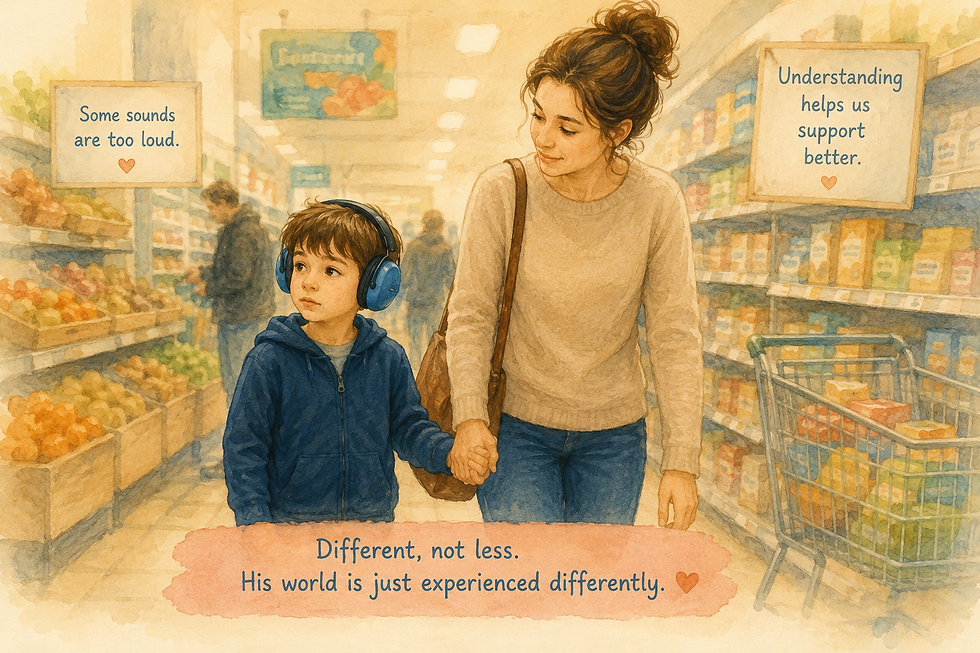
A trip to the supermarket could end in tears.
A vacuum cleaner could send him running to another room.
Certain clothes were impossible for him to wear.
Some foods were accepted one day and completely refused the next.
At first, I wondered what I was doing wrong.
Later, I learned something that changed the way I saw the world.
My son wasn't being "difficult."
His brain was processing sensory information differently.
Learning about sensory processing helped me understand many of the behaviors that once seemed confusing. It didn't solve every challenge overnight, but it helped me respond with more patience, understanding, and confidence.
If you're just beginning this journey, I hope our experience helps you feel a little less alone.
What Is Sensory Processing?
Our brains constantly receive information through our senses.
Sight
Sound
Touch
Smell
Taste
Movement
Body awareness
Most people automatically organize this information.
For many autistic children, however, sensory information can feel much stronger or sometimes much weaker than expected.
This means everyday experiences that seem ordinary to others can feel overwhelming, painful, or even frightening.
Every Child Experiences Sensory Differences Differently
One of the biggest lessons I learned is that no two autistic children experience sensory processing in exactly the same way.
For my son, some of the biggest challenges included:
Loud or unexpected sounds
Bright lights
Certain food textures
Clothing textures
Busy environments
Sudden transitions
Your child may have completely different sensory preferences—and that's perfectly okay.
There is no "one-size-fits-all" sensory profile.

Everyday Challenges We Faced
Some days were harder than others.
Simple activities that many families take for granted often required careful planning.
Going shopping.
Eating in restaurants.
Haircuts.
Birthday parties.
School assemblies.
Even getting dressed could become overwhelming.
At the time, these moments felt exhausting.
Looking back now, I realize my son wasn't trying to make life difficult.
He was trying to cope with an environment that felt overwhelming.
Parent Tip :When your child seems overwhelmed, ask yourself:
"What might they be experiencing through their senses?"
Sometimes changing the environment is more helpful than trying to change the behavior.
Creating a Sensory-Friendly Home
One of the best decisions we made was creating spaces where our son could feel safe.
We didn't need expensive equipment.
Small changes made a big difference.
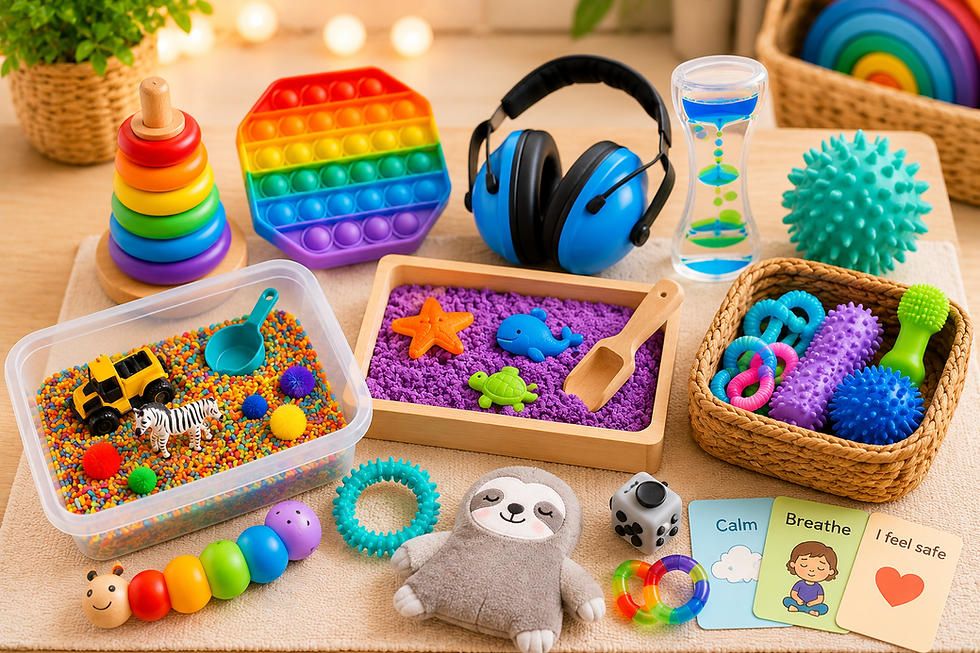
Some ideas that helped us:
Using softer lighting
Keeping a quiet corner available
Having noise-canceling headphones nearby
Offering favorite sensory toys
Keeping predictable routines
Reducing unnecessary background noise
Our home didn't become perfect.
It simply became more comfortable for him.

Communication Isn't Only Words
My son is largely non-speaking.
For a long time, I worried that we would never truly understand each other.
Over time, I realized communication is much bigger than spoken language.
Facial expressions.
Body language.
Gestures.
Pictures.
Technology.
Every child communicates somehow.
Our job is to discover what works best for them.
Parent Tip : Don't focus only on spoken words.
Celebrate every successful attempt your child makes to communicate.

Celebrate Every Small Success
Progress rarely happens all at once.
Sometimes the biggest victories look very small to other people.
The first time my son tolerated a new texture.
The first time he entered a noisy building.
The first successful haircut.
The first grocery trip without becoming overwhelmed.
These moments deserve to be celebrated.
Small steps become big achievements over time.

Final Thoughts
Living with sensory processing differences has taught me one important lesson.
What looks like challenging behavior is often a child asking for help in the only way they know how.
When we begin to understand sensory needs, we stop asking,
"How do I stop this behavior?"
and start asking,
"How can I support my child?"
That simple shift changes everything.
Every autistic child experiences the world differently.
There is no perfect parent.
There is no perfect strategy.
There is only learning, growing, and taking one small step at a time.
And that is enough.
Looking for more autism resources?
If this article helped you, you may also enjoy:

Comments