
What Are the Best Sensory Toys for Autism? 10 Ideas Parents Can Try

Updated: Aug 20
Published: Nov 15th, 2024 • Last updated: July 27, 2026
When my child was younger, I remember standing in the toy aisle feeling completely overwhelmed.
There were hundreds of sensory toys, and I had no idea what to choose. I didn't want to waste money buying things that would end up forgotten in a drawer.
Over time, I learned something important.
There isn't one perfect sensory toy for every autistic child.
When parents search for the best sensory toys for autism, what works for one child may be completely different from what works for another.
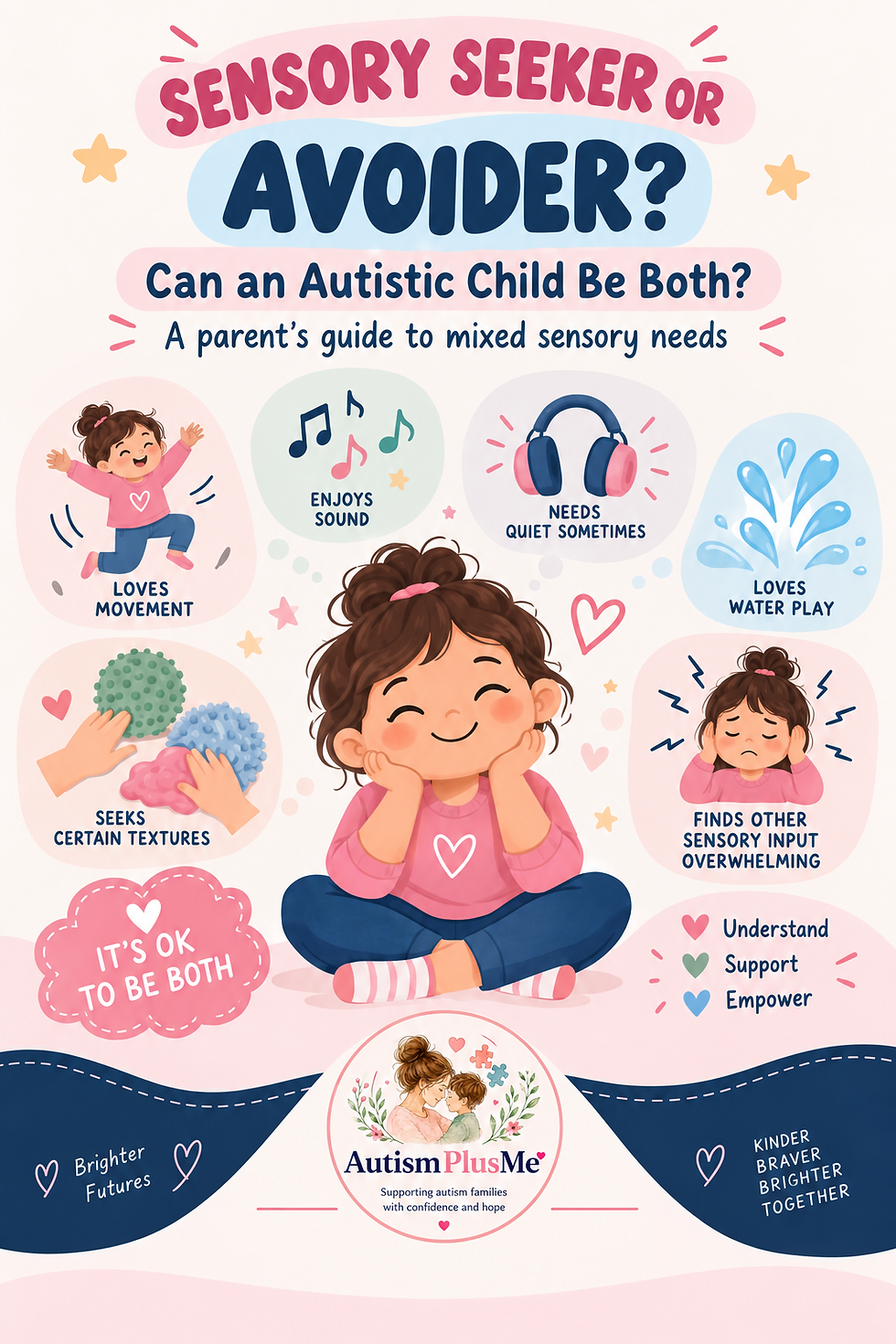
Every child has different sensory preferences and needs. Some children seek movement, others enjoy deep pressure, while some are drawn to textures, repetitive movement, or oral sensory input.
What became a favorite in our home might not interest another child at all—and that's completely okay.
This list includes sensory toys and tools that we've tried or found useful, along with ideas that may help you decide what could suit your own child's sensory preferences.
How Do You Choose Sensory Toys for an Autistic Child?
Before choosing a sensory toy, I try to think about what my child actually seeks or avoids.
Does your child enjoy movement?
Do they like squeezing or touching different textures?
Do they chew on clothing or other objects?
Do they seek deep pressure?
Or do they become overwhelmed by certain sounds, lights, textures, or smells?
Understanding these preferences can make it easier to choose sensory toys that your child may actually enjoy instead of simply buying whatever is popular.
I also learned to introduce new sensory toys gradually and pay attention to my son's response. If he wasn't interested in something, I didn't force it. We simply tried something else.
1. Fidget Spinners

I wasn't sure whether a simple fidget spinner would make much difference, but it quickly became one of the easiest tools to keep in my bag. During long waits, car rides, or while sitting through appointments, having something to keep little hands busy often helped my child stay calmer and more focused.
Fidget spinners aren't a magic solution, and not every child enjoys them, but they are inexpensive, portable, and worth trying if your child enjoys movement or likes to keep their hands busy.
May be helpful for children who:
Like repetitive hand movements
Find it difficult to sit still
Benefit from something to do with their hands while listening or waiting
Parent tip: Keep one in your purse or car. It can be surprisingly useful during unexpected waiting times.
2. Sensory Chew Toys

Some children naturally seek oral sensory input. For them, chew toys can be much safer than chewing on clothing, pencils, or fingers.
Finding the right texture sometimes takes a little trial and error. Some children prefer soft silicone, while others enjoy firmer chew tools.
The goal isn't to stop the chewing—it's to provide a safe alternative.
May be helpful for children who:
• Chew on shirts
• Bite sleeves
• Enjoy oral sensory input
Parent Tip: Wash chew toys regularly and keep an extra one in your bag for outings.
3. Weighted Blankets

One of the things I love about weighted blankets is the feeling of comfort they can provide.
Many children enjoy the gentle pressure, especially during quiet time, reading, or bedtime. While they aren't suitable for every child, they can become part of a calming bedtime routine.
Always choose the correct weight and ask your healthcare professional if you're unsure whether a weighted blanket is appropriate for your child.
May be helpful for children who:
• Need help winding down
• Enjoy deep pressure
• Like cozy blankets
Parent Tip :Use it while reading together before bedtime—not only while sleeping.
4. Sensory Balls

These have always been one of my favorite sensory toys because they're so versatile.
Some children squeeze them.
Others roll them across the floor.
Some simply enjoy exploring all the different textures.
They're wonderful because they encourage movement while providing sensory input at the same time.
Parent Tip :Choose several different textures rather than buying identical balls.
5. Tactile Tiles

Tactile tiles turn exploration into play.
Walking across different textures, touching them with hands, or using them during games can make sensory exploration fun instead of overwhelming.
Children often don't even realize they're practicing sensory skills because they're busy playing.
Parent Tip :Place a few tiles near your child's favorite play area.
6. Kinetic Sand

If you've never tried kinetic sand before, don't be surprised if your child doesn't want to stop playing with it.
There's something incredibly satisfying about squeezing, molding, and watching it slowly fall apart.
It encourages creativity while giving children a calming sensory experience.
Parent Tip :Use a tray underneath to keep cleanup simple.
7. Calm Down Kit

This isn't really one toy.
It's something you build specifically for your child.
Our calm down kit would include a few favorite sensory toys, headphones, a fidget, and comforting items that helped during overwhelming moments.
Every child's kit will look different and that's exactly how it should be.
Parent Tip :Let your child help choose what goes inside.
8. Bubble Machine

Bubbles are magical.
Sometimes the simplest toys create the biggest smiles.
Watching bubbles float, chasing them, and popping them encourages movement, visual tracking, and shared moments of joy.
It's one of those activities the whole family can enjoy together.
Parent Tip :Perfect for outdoor sensory breaks.
9. Sensory Play Kit

Sensory bins don't need to be expensive.
Some of our favorite sensory activities used simple items we already had at home.
Rice.
Pasta.
Scoops.
Cups.
Small animals.
Pom-poms.
Sometimes imagination is more important than buying expensive toys.
Parent Tip :Rotate materials every few weeks to keep activities interesting.
10. Which Sensory Toys for Autism Can Help With Movement?

Movement has always been an important type of sensory input for my son.
A sensory swing can provide gentle rocking, back-and-forth movement, or other movement that some children enjoy. For children who actively seek movement, a swing can also become a favorite place to take a sensory break.
What I've learned is that movement needs can look very different from one child to another. Some children love swinging, while others may prefer spinning, jumping, riding a scooter, or another type of movement.
The important thing is to observe what your child enjoys and what seems to help them feel comfortable and regulated.
May be helpful for children who:
Enjoy swinging or rocking
Frequently seek movement
Like active sensory play
Enjoy having a familiar place for movement breaks
Parent Tip: Start slowly and follow your child's response. Sensory preferences are individual, and more movement isn't always better.
Final Thoughts
Over the years, I've learned that sensory toys aren't about buying the most expensive products.
They're about understanding your child.
One toy may become a favorite, while another may never leave the shelf and that's
perfectly okay.
Be curious.
Try different things.
Celebrate what works.
Most importantly, remember that your love, patience, and willingness to learn matter far more than any toy ever could.
Every child is different.
And every small step is worth celebrating.
Looking for more autism resources?
If you found this guide helpful, you may also enjoy:


Comments